
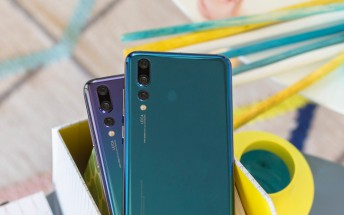
 Huawei and Leica put a lot of effort into building a unique camera. On paper, the Huawei P20 Pro camera should be the best on the market, though that paper may be tough to understand. So, let us quickly guide you through the three cameras of the Pro.
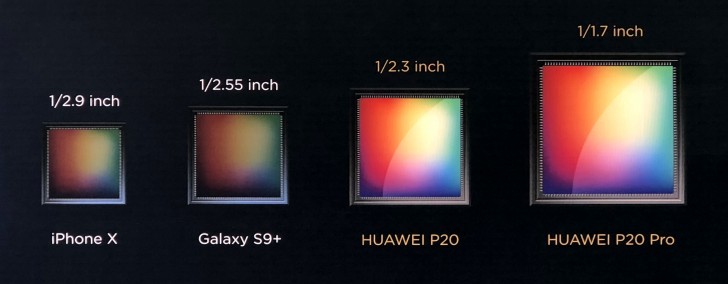
The 40 MP camera is the major selling point. It features a huge 1/1.7” sensor, considerably larger than any current phone. You’re probably thinking that this means small pixels and it does, but it’s not quite so simple.
Huawei and Leica put a lot of effort into building a unique camera. On paper, the Huawei P20 Pro camera should be the best on the market, though that paper may be tough to understand. So, let us quickly guide you through the three cameras of the Pro.
The 40 MP camera is the major selling point. It features a huge 1/1.7” sensor, considerably larger than any current phone. You’re probably thinking that this means small pixels and it does, but it’s not quite so simple.
 The sensor features something called a Quad Bayer filter, but we should probably explain what a Bayer filter is in the first place. Camera sensors have “pixels”, but they are different from the pixels on a screen – they do not have RGB subpixels or subpixels of any kind. Instead, there is a single color filter in front of each pixel, most often Red, Green or Blue. Each pixel gets information about only one of the three primary colors.
 The typical Bayer filter is a mosaic-like arrangement that has twice as many Green pixels as Red or Blue (the human eye is most sensitive to green). This means that a 12 MP camera has 6 million green pixels and 3 million each of red and blue. So, how come the final photo has 12 million RGB pixels? Well, each pixels borrows information about the other two primary colors from its neighbors with a bit of math. It’s good enough in most cases, though the interpolation causes some artifacts.
In a Quad Bayer arrangement, four pixels grouped in a square share the same color filter. It looks like this:
The typical Bayer filter is a mosaic-like arrangement that has twice as many Green pixels as Red or Blue (the human eye is most sensitive to green). This means that a 12 MP camera has 6 million green pixels and 3 million each of red and blue. So, how come the final photo has 12 million RGB pixels? Well, each pixels borrows information about the other two primary colors from its neighbors with a bit of math. It’s good enough in most cases, though the interpolation causes some artifacts.
In a Quad Bayer arrangement, four pixels grouped in a square share the same color filter. It looks like this:
 Each pixel still has neighbors of the other two primary colors, but they are not as closely packed as in regular Bayer and the math gets trickier. The overall result isn’t as accurate meaning you get less detail compared to a 40 MP sensor with a regular Bayer filter. But there’s an upside to the Quad variant.
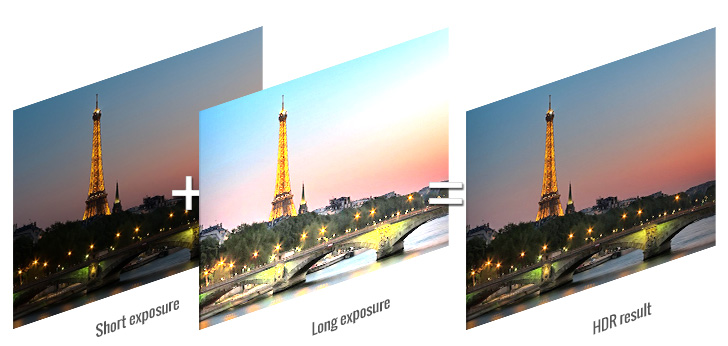
Huawei didn't officially confirm this, but here's how we think the HDR feature works. The image sensor on the P20 Pro are like two sensors interleaved together. This allows both “sensors” to take a photo of the same subject but at different exposures, which can then be stacked into an HDR photo.
Other phones have to resort to taking two photos in sequence, but that is slower and moving subjects will shift between takes and get blurred. The timing works out like this: exposure #1 + some processing time + exposure #2. Since the Huawei/Leica camera on the P20 Pro takes both photos simultaneously, it only needs as long as the longer of the two exposures.
Each pixel still has neighbors of the other two primary colors, but they are not as closely packed as in regular Bayer and the math gets trickier. The overall result isn’t as accurate meaning you get less detail compared to a 40 MP sensor with a regular Bayer filter. But there’s an upside to the Quad variant.
Huawei didn't officially confirm this, but here's how we think the HDR feature works. The image sensor on the P20 Pro are like two sensors interleaved together. This allows both “sensors” to take a photo of the same subject but at different exposures, which can then be stacked into an HDR photo.
Other phones have to resort to taking two photos in sequence, but that is slower and moving subjects will shift between takes and get blurred. The timing works out like this: exposure #1 + some processing time + exposure #2. Since the Huawei/Leica camera on the P20 Pro takes both photos simultaneously, it only needs as long as the longer of the two exposures.
 Long story short, you’re better off keeping the camera on the 10 MP setting. You get to enjoy the benefits of HDR and the 40 MP mode isn’t as sharp as the number suggests.
You may be thinking that higher resolution is still useful as it lets you zoom in on an image after it has been taken. That’s true, but if getting closer to your subject is what you want, there’s a better way – optical zoom.
The Huawei P20 Pro has an 8 MP tele camera. Its lens has an 80 mm (equiv.) focal length, compared to 27 mm of the other two cameras – that’s 3x optical zoom. Since the tele camera is next to the 40 MP camera, their views of the world overlap, allowing the chipset to combine information from both cameras to achieve 5x hybrid zoom. The quality isn’t as good as the optical zoom, but it’s miles ahead of other phones, which typically have 2x tele lenses without the benefit of a high-res neighbor.
Long story short, you’re better off keeping the camera on the 10 MP setting. You get to enjoy the benefits of HDR and the 40 MP mode isn’t as sharp as the number suggests.
You may be thinking that higher resolution is still useful as it lets you zoom in on an image after it has been taken. That’s true, but if getting closer to your subject is what you want, there’s a better way – optical zoom.
The Huawei P20 Pro has an 8 MP tele camera. Its lens has an 80 mm (equiv.) focal length, compared to 27 mm of the other two cameras – that’s 3x optical zoom. Since the tele camera is next to the 40 MP camera, their views of the world overlap, allowing the chipset to combine information from both cameras to achieve 5x hybrid zoom. The quality isn’t as good as the optical zoom, but it’s miles ahead of other phones, which typically have 2x tele lenses without the benefit of a high-res neighbor.
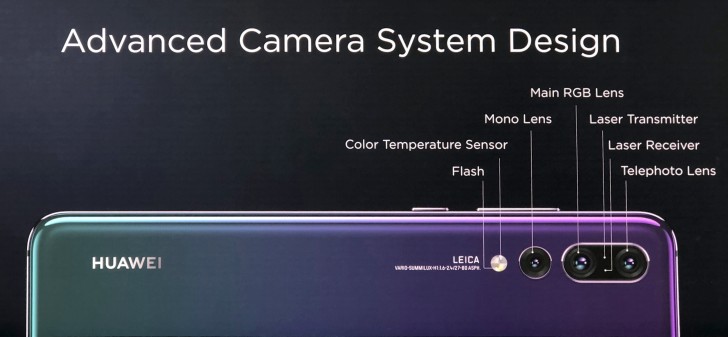 What about the third camera, the 20 MP black & white one? Well, that one does not have a Bayer filter at all – no need to record color – so it gets more light. You see, the filter removes much of the light so less of it reaches the pixels. A B&W camera handles better in the dark, but most people want color images. There’s a workaround to that.
Recall that both the 40 MP camera and the B&W one have the same focal length, 27mm (equiv.). This means they see roughly the same image – not just overlapping images like the tele/40 MP cameras, but actually the same image from left to right, top to bottom (aside from a small shift in perspective).
This allows the P20 Pro to combine the low-light shooting advantages of the B&W camera with color information from the 40 MP sensor into one bright and colorful nighttime shot. We suspect that Huawei uses the B&W camera even during the day, the phone will complain if it’s covered up (even in broad daylight).
Plus, the P20 Pro is the only phone currently on the market that can push the ISO up to 102,400. Sony recently teased a prototype that can do that, but it was just that - a tease. Current Xperias top out at 12,800.
What about the third camera, the 20 MP black & white one? Well, that one does not have a Bayer filter at all – no need to record color – so it gets more light. You see, the filter removes much of the light so less of it reaches the pixels. A B&W camera handles better in the dark, but most people want color images. There’s a workaround to that.
Recall that both the 40 MP camera and the B&W one have the same focal length, 27mm (equiv.). This means they see roughly the same image – not just overlapping images like the tele/40 MP cameras, but actually the same image from left to right, top to bottom (aside from a small shift in perspective).
This allows the P20 Pro to combine the low-light shooting advantages of the B&W camera with color information from the 40 MP sensor into one bright and colorful nighttime shot. We suspect that Huawei uses the B&W camera even during the day, the phone will complain if it’s covered up (even in broad daylight).
Plus, the P20 Pro is the only phone currently on the market that can push the ISO up to 102,400. Sony recently teased a prototype that can do that, but it was just that - a tease. Current Xperias top out at 12,800.
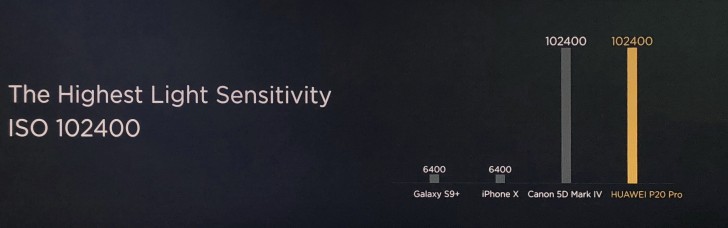 Of course, higher ISO means higher noise. For nighttime landscape photography, you want to increase the exposure time instead. Lucky for you that Huawei's AI-powered stabilization allows you to shoot multi-second exposures hand-held. The results are beyond impressive.
Naturally, both the 40 MP camera and the tele camera have optical image stabilization. That's quite important with zoom as every twitch of your hand is multiplied by the zoom factor. Huawei and Leica also improved the Laser autofocus system, which now works up to 2.4m (twice as far as P10's Laser AF) and there's "4D autofocus" with motion prediction to make sure subjects stay in focus.
If you had any doubts that Huawei and Leica built one of the most advanced mobile cameras on the market, just remember this – in the majority of its shots it’s using two of its three sensors and melds their images seamlessly.
Of course, higher ISO means higher noise. For nighttime landscape photography, you want to increase the exposure time instead. Lucky for you that Huawei's AI-powered stabilization allows you to shoot multi-second exposures hand-held. The results are beyond impressive.
Naturally, both the 40 MP camera and the tele camera have optical image stabilization. That's quite important with zoom as every twitch of your hand is multiplied by the zoom factor. Huawei and Leica also improved the Laser autofocus system, which now works up to 2.4m (twice as far as P10's Laser AF) and there's "4D autofocus" with motion prediction to make sure subjects stay in focus.
If you had any doubts that Huawei and Leica built one of the most advanced mobile cameras on the market, just remember this – in the majority of its shots it’s using two of its three sensors and melds their images seamlessly.
Monday, 16 April 2018
Explaining the tech behind Huawei P20 Pro's triple camera
Huawei sells P20 and P20 Pro phones worth $15 million in 10 seconds
Huawei's latest flagship smartphones, the P20 and P20 Pro, have made quite a splash in the mobile world since they were announced last month.
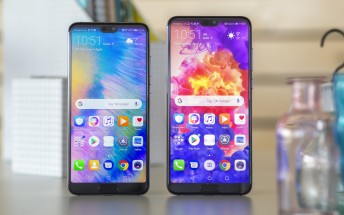
And that's now emphasized even more by their sales performance in the company's home market, China.
P20 and P20 Pro devices worth CNY 100 million (that's more than $15 million) were sold in the country in the first 10 seconds after they became available to purchase from its online store last Thursday.
That's definitely impressive, and it might predict that the duo will be successful elsewhere too.
The P20 and P20 Pro are now available globally at Huawei authorized retailers and select mobile carriers.
Sunday, 15 April 2018
Huawei P20 Pro Price And Full Specification
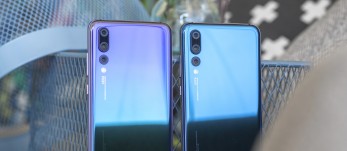
Introduction
Huawei was among the front-runners in the dual-camera race with the P9 and then the Mate 10, so who better to take things to the next level? The Huawei P20 Pro one-ups all current major players and comes with three cameras on its back, each unique in its own right.
Okay, the 20MP monochrome sensor is the least exciting, but not for its lack of color - it's just that we've seen it on a couple of generations of Mates and the P10. The other two, however, are all new.
The star of the show is the 40MP camera - let's go ahead and call it the primary one. It's the most resolution we've seen on a smartphone since the Lumia 1020 PureView all the way back in 2013. The third one has a modest 8MP resolution but boasts an 80mm-equivalent focal length - effectively 3x the focal length of the primary cam. All this camera goodness, of course, carries a Leica branding - the badge of a German optics specialist makes everything better as the Lumia 1020, and its Zeiss lens can attest.
There's more megapixels on the front, 24 of them in the selfie camera. And you couldn't miss it - it's right there in the notch. Yup, notches are everywhere whether they're needed or not, and whether you like them or not.
For all the abundance of pixels in the cameras (some 96MP combined), there are not all that many pixels on the screen - the 6.1-inch AMOLED panel has a FullHD+ resolution of a Huawei-specific variety (1080 x 2240px) to account for the notch.
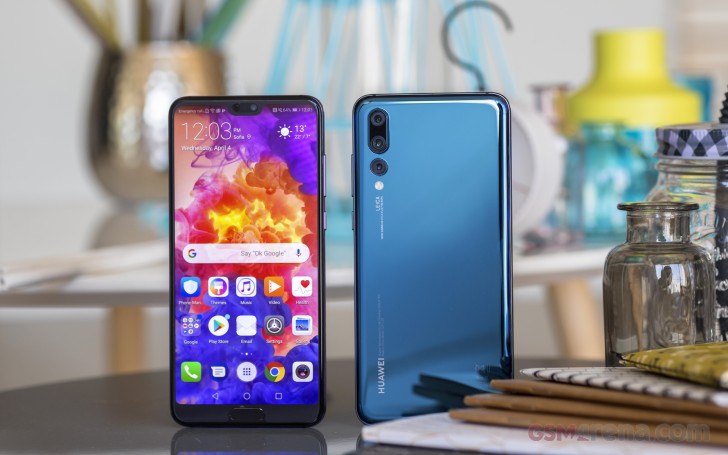
Huawei likes its batteries big, and the P20 Pro gets a nice 4,000mAh power pack, with the company's flavor of fast charging, one of the fastest around. Another thing Huawei's own, the chipset is the Kirin 970 from the last-gen Mates, so no surprises there either. There's RAM and storage to spare too.
Huawei P20 Pro at specs
Body: dual-glass with metal frame, 7.65mm thick
Screen: 6.1" AMOLED, 1080 x 2240px resolution (408ppi);
Chipset: Kirin 970 chipset, octa-core processor (Cortex-A73 2.4GHz + A53 1.8GHz), Mali-G72 MP12 GPU
Memory: 6GB RAM, 128GB storage
OS: Android 8.1 Oreo with EMUI 8.1;
Camera: 40MP f/1.8 color + 8MP f/2.4 color telephoto + 20MP f/1.6 monochrome; 4K video capture, 720@960fps slow-mo; Leica co-developed
Camera features: 1/1.7" 40MP sensor, up to ISO 102,400, 3x optical zoom, 5x hybrid zoom, OIS + EIS, can change focus and lighting in photos after they are taken, Variable Aperture, Portrait Mode, can shoot long-exposure without a tripod
Selfie cam: 24MP, f/2.0 Leica lens, Portrait Mode with live bokeh effects; 2D Face Unlock
Battery: 4,000mAh; Super Charge
Security: Fingerprint reader (front), 0.4 seconds response time
Connectivity: Dual SIM, Wi-Fi a/b/g/n/ac, Bluetooth 4.2 + LE, NFC, USB Type-C
Misc: IR blaster, stereo speakers
Huawei may be guilty of following some of the not-so-positive trends in the industry such as removing the headphone jack and having a notch on the screen, but we're glad the IR emitter is still on board. It's either Huawei or Xiaomi that you've got left to look to if you want to use your phone to control non-smart stuff around the house. Even the regular P20 won't do - you'll need to step up to the Pro we've got here.
So yes, you can have the latest flagship smartphone replace the remote for your 1992 VCR, but first, you'd need to take it out of the box, so let's start with that.
Huawei P20 Pro unboxing
The Huawei P20 Pro comes in a white cardboard box, which contains all the kit you'd need to get started. Underneath the phone, you'll find a set of earbuds that connect via USB-C, but also a USB-C to 3.5mm adapter in case you want to plug your existing headphones.
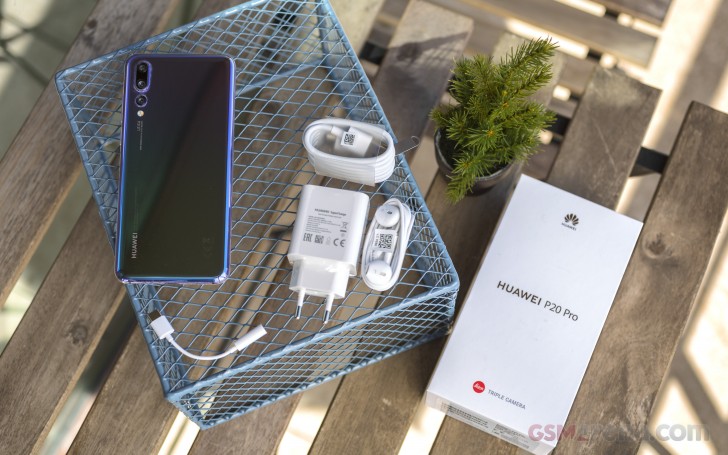
There's a USB-A to USB-C cable and a fast charger, and you need both of these together for the proprietary fast charging to work. We love fast charging, but we hate proprietary tech limitations, so we're conflicted. In any case, the fact that you have the quick charger and the cable in the box is great (we're looking at you, Apple).
You won't think about the accessories when you first see the phone though, it's simply gorgeous to look at. Join us on the next page where we take a closer look at the two shades of awesomeness on the units we have for review.

